Artist’s Open House Exhibition

news260413a

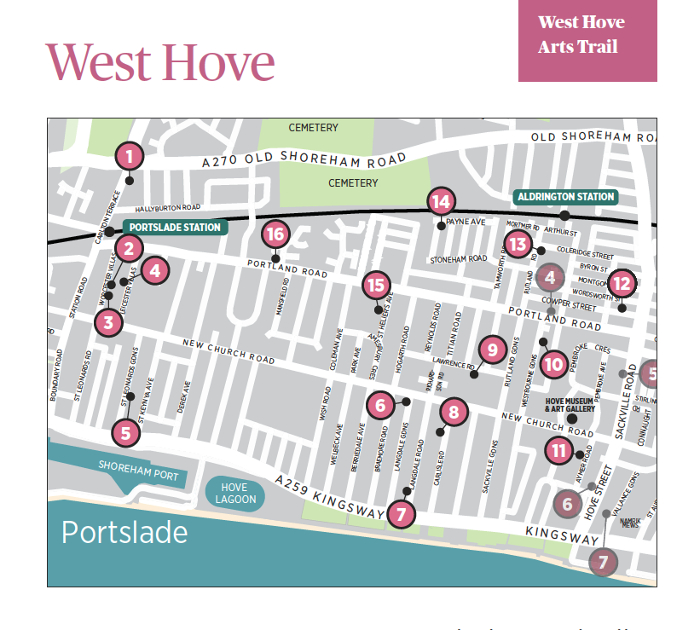
Colleen will be showing her work at ‘Ilana Richardson and Guests’, venue 6 on the West Hove Trail as part of the OpenHouse exhibition in the Brighton Festival.

66 Langdale Gardens, Hove, BN3 4HH

Tel: 01273 726 464

e-mail: art@ilana-richardson.com

Open every Saturday and Sunday in May from 11 am – 5 pm

Colleen Slater – Photography
Ilana Richardson – Paintings and Prints
Jo Pearson – Silver and Glass Jewellery
Helen Friend – Ceramics-Raku
Lorraine Gibby – Jewellery
Dani Crompton – Jewellery
Tessa Wolfe Murray – Ceramics

news260413b


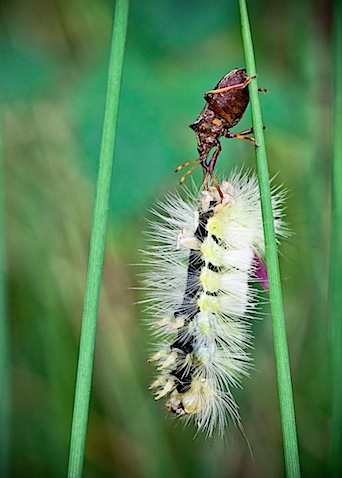
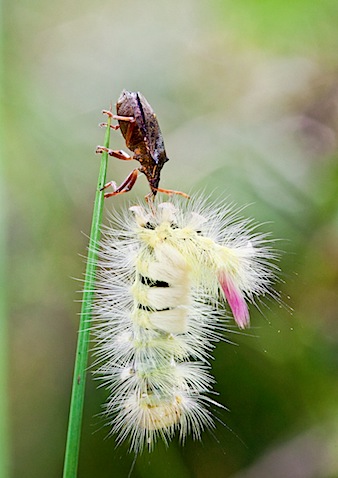
Shield Bug With Tussock Moth Caterpillar Prey

Shield Bug Prey

I was lying down in grass on Ditchling Common in Sussex when out of the corner of my eye, I spotted something happening which grabbed my attention. A Spiked Shieldbug, Picromerus bidens was dragging this Pale Tussock Moth caterpillar, Dasychira pudibunda, up a grass stem. At the time, I had no idea that these shield bugs feed on caterpillars as I’d never previously witnessed anything like this. Presumably, the bug was searching for a safe place in which to devour it’s prey.

Shield Bug Prey

Shield Bug with Pale Tussock Moth Caterpillar

Canon 5D Mark II, 100mm f2.8 macro lens, 1/200 sec @ f8, ISO 800, fill flash, hand-held

The internet is an excellent resource for identification purposes, I had no idea what sort of caterpillar this was before I looked it up using Google images. I also use it to research the lifestyles of the creatures I’ve discovered. I can’t imagine how I’d manage without it!

321_ditchling_130_web_web-2

Canon 5D Mark II, 100mm f2.8 macro lens, 1/200 sec @ f8, ISO 800, fill flash, hand-held.

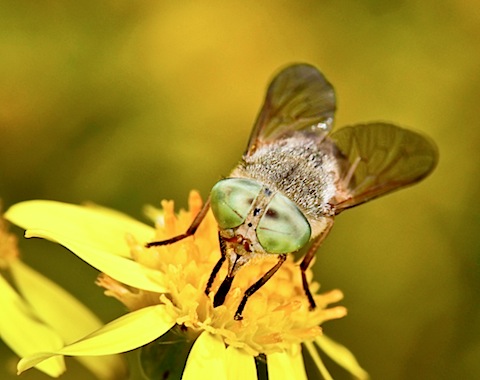
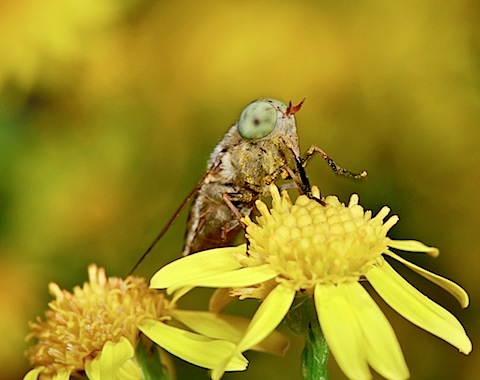
However, I’ve never managed to find out what sort of fly I shot in the following image. It was the size of a blue bottle but had sage-green eyes and a very pale brown thorax. If anyone recognises it, I’d love to know what it is.

Green-eyed Fly

Canon 5D Mark II, 100mm f2.8 macro lens, 1/200 sec @ f11, ISO 100, flash, hand-held.

Green-eyed Fly

Canon 5D Mark II, 100mm f2.8 macro lens, 1/200 sec @ f11, ISO 100, flash, hand-held.

Intentional Camera Movement – Photographic Impressionism

Digital image capture has extended the scope of image making by enabling the photographer, unhampered by the prohibitive cost of film, to adopt a much more experimental way of working. A new world of possibilities has opened up by using the camera in a way that may seem perverse as for years, the industry has prided itself on the achievement of super-sharp, crisply focused images.
392_icerink-_208_srn_pfo-2_web1

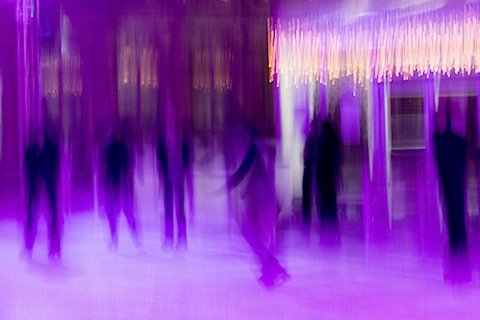
Canon 5D Mark II, Canon EF 24-105mm f/4 L IS lens @ 85mm, 1/5 sec @ f7.1, ISO 500

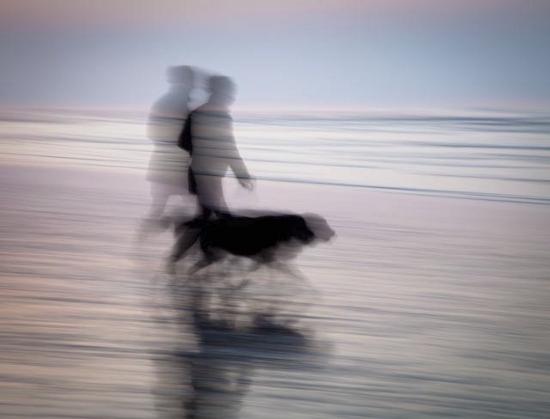
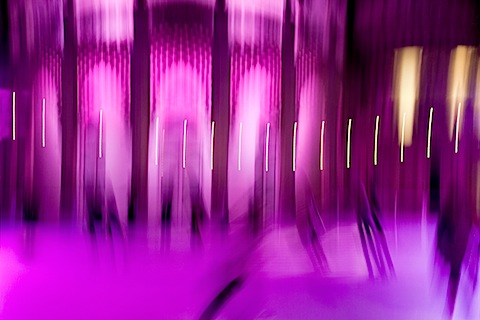
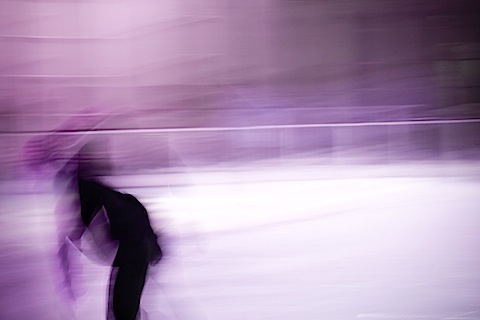
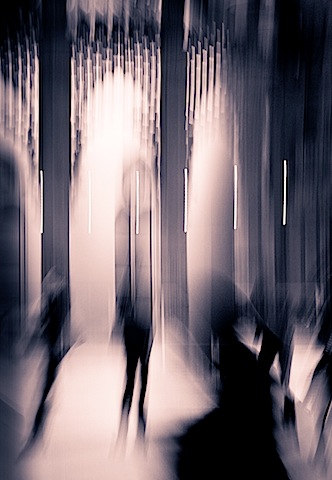
ICM or Intentional Camera Movement, whereby the camera is moved in some way whilst the shutter is open, introduces elements of chance and random effects to the resulting images. The shutter speed is slower than for most photography, resulting in blurred images imbued with energy and feeling in the manner of Impressionism and Expressionism in painting. There is concern with the spiritual, the unconscious and the responses and states of the mind, emotional and psychological, rather than an interest in imitative replication of physical appearance. Unnatural colours, heightened depictions of light, shadow and line and incongruous or surreal juxtaposition of objects help depict the artist’s reaction to the world.
392_icerink-_12_pnt_16_s_u_srn_pfo_web1

Canon 5D Mark II, Canon EF 24-105mm f/4 L IS lens @ 85mm, 0.4 sec @ f7.1, ISO 500

The first perception of photography was as a means to accurately record reality, as if the photograph was in some way a copy of reality. Beginning in the 19th century, painters freed from commissions to paint family portraits and other representational type pictures could develop more abstract imagery. Now, through the development of digital technology, the opportunity for the photographer to experiment has dramatically widened.
392_icerink-_225_wip_wip_web1

Canon 5D Mark II, Canon EF 24-105mm f/4 L IS lens @ 102mm, 0.4 sec @ f8, ISO 640

I took these photographs at the Ice Rink in the grounds of Brighton’s Royal Pavilion. There is an immediacy to the creation of images made using this technique which I find preferable to that of brushing paint on a surface. You are making pictures ‘in the moment’, in the midst of the action, affected by the weather and the elements and whatever is occurring around you. The images have had minimal post-processing editing.
392_icerink-_89_pnt_s_u_web1

Canon 5D Mark II, Canon EF 24-105mm f/4 L IS lens @ 58mm, 1/4 sec @ f8, ISO 640

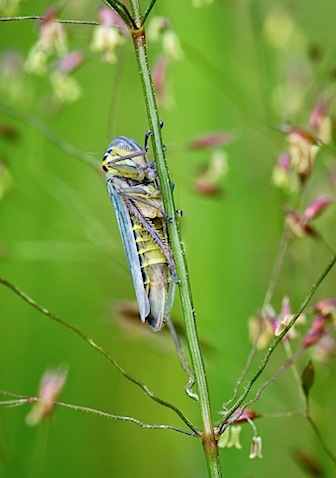
Leafhopper – Cicadella viridis

This is a very small insect, 6-9 mm in length, with the female being considerably larger than the darker-coloured male. It isn’t an insect I go out specifically looking for but one which I might photograph if I come across them. I was lying down in long grass near the Blaen y Glyn waterfalls near Talybont in the Brecon Beacons National Park when I saw lots of them in a small area. They were extremely flighty and difficult to photograph so I was pleased to find one that didn’t seem to move like the others.

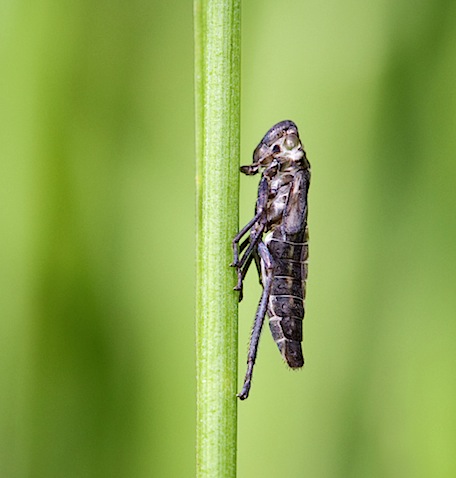
Leaf Hopper Exuvium

Canon 7D EF 100 mm f2.8 macro IS L lens, 1/80 @ f10 ISO 250, handheld.

It only became apparent after taking a few shots that I had in fact photographed an exuvium which is the cast exoskeleton left after the insect larva has moulted. You may think this rather unobservant of me but these creatures are so small that I couldn’t see any difference, not even when looking through the lens. Usually, I mount the camera on a tripod, use Live View and enlarge the subject x 10 for precision focussing but as I was on the ground using my elbows as supports, that wasn’t possible.

Leaf Hopper - Cicadella viridis

Canon 7D EF 100 mm f2.8 macro IS L lens, 1/60 @ f10 ISO 320, handheld.

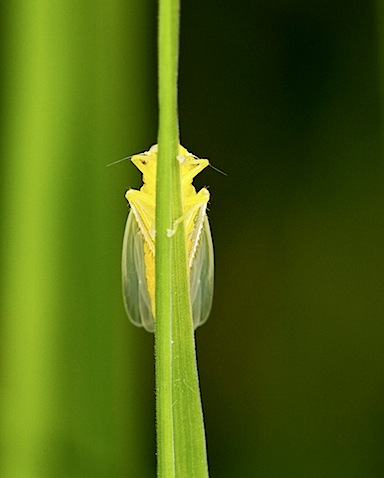
This is a recently emerged nymph which is yellow with white wings.

369_wales_257_web

Canon 7D EF 100 mm f2.8 macro IS L lens, 1/60 @ f10 ISO 400, handheld.

Finally, a tiny colourful adult that stayed still long enough for me to get a shot.

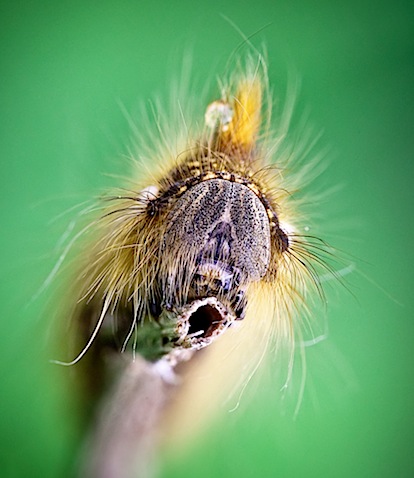
Drinker Moth Caterpillar at Woods Mill

I came across this Drinker moth caterpillar when wandering around in the rain last week at Woods Mill nature reserve in West Sussex. It took some time before I found much insect activity as many insects were sheltering beneath leaves and other things. This caterpillar was resting on an old, decayed grass stem about 40 cm above the ground alongside a path. I took a couple of record shots along it’s length for identification purposes…then I took this one!

354_woodsmill_31_web

Canon 5D Mark II EF 100 mm f2.8 macro IS L lens, 1/80 @ f9 ISO 1000, handheld.

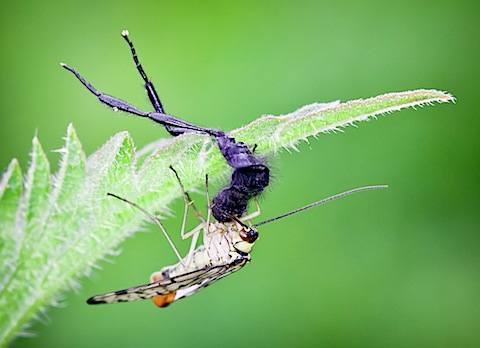
Shortly afterwards, I discovered this Scorpion fly devouring a St. Mark’s fly. The light levels were quite low so the shutter speeds were slow but I’m pleased with the level of sharpness I achieved using the image stabilized version of this lens. With my previous non-IS f2.8 macro lens, I needed a shutter speed of at least 1/125 second.

354_woodsmill_82_pnt_s_u_web

Canon 5D Mark II EF 100 mm f2.8 macro IS L lens, 1/50 @ f10 ISO 640, flash, handheld.

Artist’s Open House Exhibition 2012

news270412a

Colleen will be showing her work at venue Number Forty on the West Hove Trail as part of the Open House exhibition in the Brighton Festival.

40 Leicester Villas
Hove
BN3 5SQ

Tel: 07827 314 978

Open every Saturday and Sunday in May from 11 am – 5 pm

Colleen Slater – Photography
Paula Fahy – Painting
Jane Sedgewick – Ceramics
Chris Formaggia – Mixed Media


View Larger Map

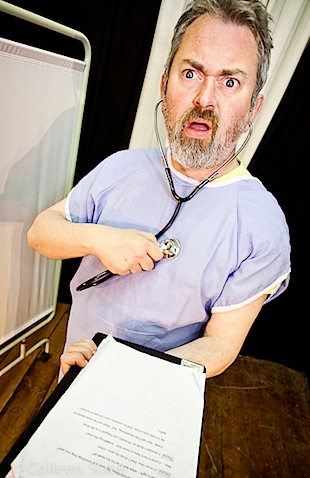
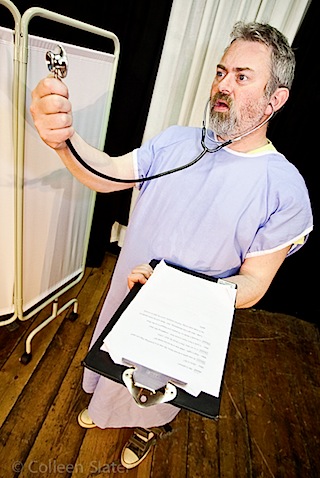
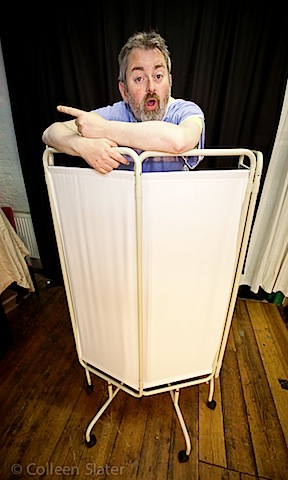
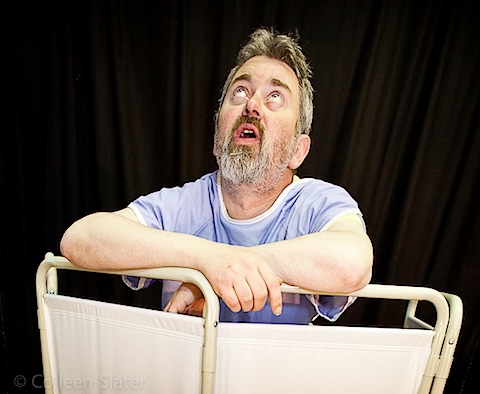
Heart: An Angina Monologue Performed and Written by Doug Devaney

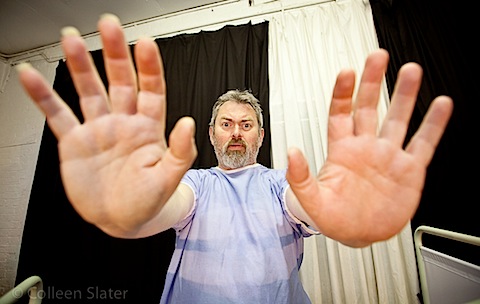
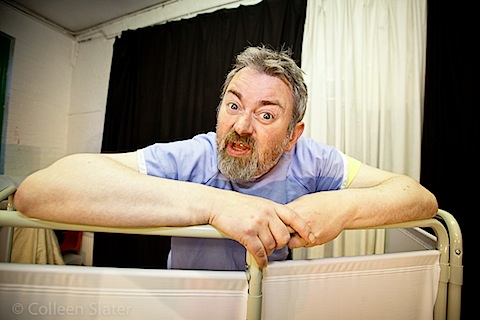
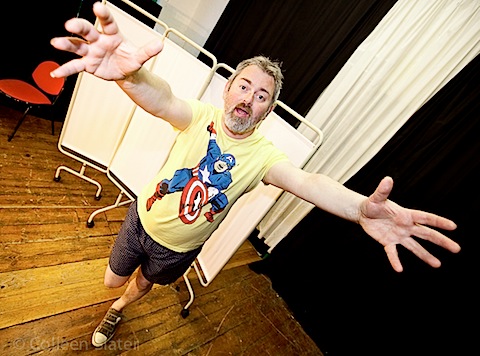
Doug Devaney is a writer and performer based in Brighton. His latest show was written following a heart attack he experienced a couple of years ago and will raise funds for the British Heart Foundation.

He took his one-man show Heart: An Angina Monologue to the stage at the West Hill Community Hall near Seven Dials during the Easter weekend and I took some shots of him during rehearsals and the show.

mg_3691_web          mg_3689_web

mg_3674_web          mg_3630_web

mg_3681_web

mg_3659_web

mg_3653_web

mg_3650_web

All the shots were taken with my Canon 5D Mark ll and Canon 16-35 mm f2.8 L lens

Outdoor Photography Magazine’s ‘Winter’ Competition 2012

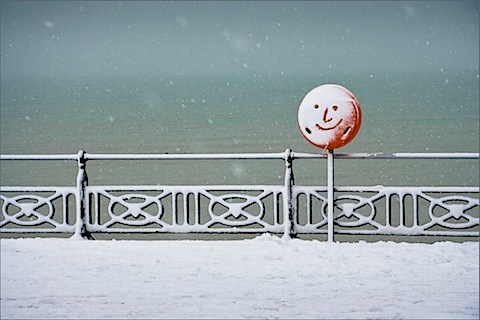
This image won the competition and was published in the April edition of the magazine

colleen_slater_-snowy_smiley

Canon EOS 350D, 17-85mm lens at 85mm, ISO 200, 1/125sec at f8

I was out taking photos in a snowstorm on Hove seafront in East Sussex, and came upon this lifebuoy, on which someone had drawn a smiley face. The cheerful, red face contrasted wonderfully with the bleak, grey winter landscape.

Image Processing – 16 Versus 8 Bit.

WHY WORK IN 16-BIT?

JPEG is a lossy 8-bit format. An 8-bit image has 256 levels of brightness, from 0 (black) to 255 (white). A 16-bit RAW image has 65,536 levels of brightness or, put another way, 256 mini levels of brightness in between the 256 levels (65,536 divided by 256 = 256). This represents a huge increase in captured information which means you have plenty of leeway for making adjustments.

You don’t need to work in 16-bit all the time, especially if storage space, software or computer processor speed are issues. But if you are working on an image that requires adjustments, especially to the brightness of the image, 16-bit will give you maximum headroom. Process your image as a RAW, TIFF or PSD (Photoshop Document) file – if you are starting with a JPEG fie, convert it to a TIFF file first. You can convert back to 8-bit after you’ve finished editing.

201203041147

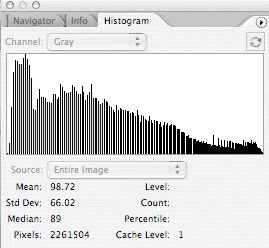
8-bit adjusted

 2012030411471

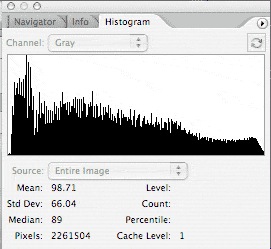
16-bit adjusted

Look at the histograms of images that have had the Levels adjusted and you can see that the diagram of the 8-bit file has lots of spikes just like a ‘comb’, which indicates some brightness levels have been lost. The spikiness occurs because the 256 levels of tones have been stretched out leaving gaps. This means that some tones in the image will be missing, degrading the image – known as posterization, showing noticeable jumps in tonal values – known as artifacts.

Make the same adjustment to a 16-bit image and you’ll end up with a much healthier looking histogram which is characteristic of an image with fine, smooth tonal transitions.